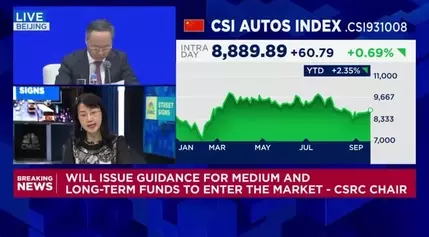
China's Central Bank Unleashes Sweeping Stimulus Measures to Boost Investor Confidence
In a surprise move, the People's Bank of China (PBOC) has announced a series of policy easing measures aimed at reviving the country's slowing economy and bolstering investor confidence. The central bank's governor, Pan Gongsheng, unveiled the measures during a rare briefing, signaling the government's determination to address the economic challenges facing the world's second-largest economy.Unlocking Growth Potential: China's Central Bank Unveils Comprehensive Stimulus Package
Cutting Reserve Requirement Ratio and Interest Rates
The PBOC has decided to reduce the reserve requirement ratio (RRR) for banks by 50 basis points, a move that will free up more liquidity in the financial system. Additionally, the central bank will cut the seven-day reverse repurchase rate from 1.7% to 1.5%, making it cheaper for banks to borrow funds. These measures are expected to provide a much-needed boost to the Chinese economy, which has been grappling with a slowdown in growth.
Lowering Loan Prime Rates and Easing Housing Policies
The central bank also announced that it could potentially cut the loan prime rate (LPR) by 0.2 to 0.25 percentage points, although it did not specify whether this would apply to the one-year or five-year LPR. The one-year LPR currently stands at 3.35%, while the five-year LPR is at 3.85%. Additionally, the authorities have decided to reduce down payments for second homes, a move that could help stimulate the real estate market.
Injecting Long-Term Liquidity into the Economy
As part of the comprehensive stimulus package, the PBOC will also provide 1 trillion yuan (1.78 billion) of long-term funds to the market. This influx of liquidity is expected to support various sectors and businesses, ultimately driving economic growth.
Boosting Investor Confidence and Market Sentiment
Winnie Wu, China strategist at Bank of America, described the PBOC's actions as a "big bang to boost investor confidence in the market." The measures are expected to have a positive impact on sectors like banking and insurance, although the recovery in domestic consumption may take longer to materialize. Wu emphasized the need for further fiscal policy support and structural reforms to ensure a sustainable market rally.
Diverging Monetary Policies Across Asia-Pacific
While the PBOC is taking bold steps to stimulate the Chinese economy, the Reserve Bank of Australia (RBA) has maintained its benchmark policy rate at 4.35%, in line with expectations from economists. The Commonwealth Bank of Australia (CBA) noted that the economic data flow since the last RBA meeting has either been softer or in line with the central bank's expectations, leading to a slightly less hawkish statement but no material shift in language or tone.
Ripple Effects Across Asia-Pacific Markets
The PBOC's policy easing measures have had an immediate impact on Asia-Pacific markets, with the Hong Kong Hang Seng index surging 2.35% on its open and the mainland Chinese CSI 300 index rising by 1%. Real estate stocks and basic materials stocks were among the top performers, reflecting the market's optimism about the potential benefits of the stimulus package.In contrast, Australia's S&P/ASX 200 index fell 0.31%, while Japan's Nikkei 225 and Topix indices gained 1.37% and 1%, respectively, as Japanese markets returned from a holiday. South Korea's Kospi remained flat, while the small-cap Kosdaq rose 0.85%.The ripple effects of the PBOC's actions were also felt in the United States, where the Nasdaq Composite ticked up 0.14%, mirroring the gains made by the S&P 500 and Dow Jones Industrial Average, which both reached new closing highs on Monday.